San Jose Neighborhoods Explained For First-Time Buyers
July 9, 2026
July 9, 2026
Trying to pick the right part of San Jose as a first-time buyer can feel harder than picking the right home. One neighborhood may point you toward condos near rail, while another is mostly older single-family streets with a very different daily rhythm. If you want to understand where to start, this guide will help you compare San Jose neighborhoods in a practical way so you can match your budget, commute, and lifestyle needs with more confidence. Let’s dive in.
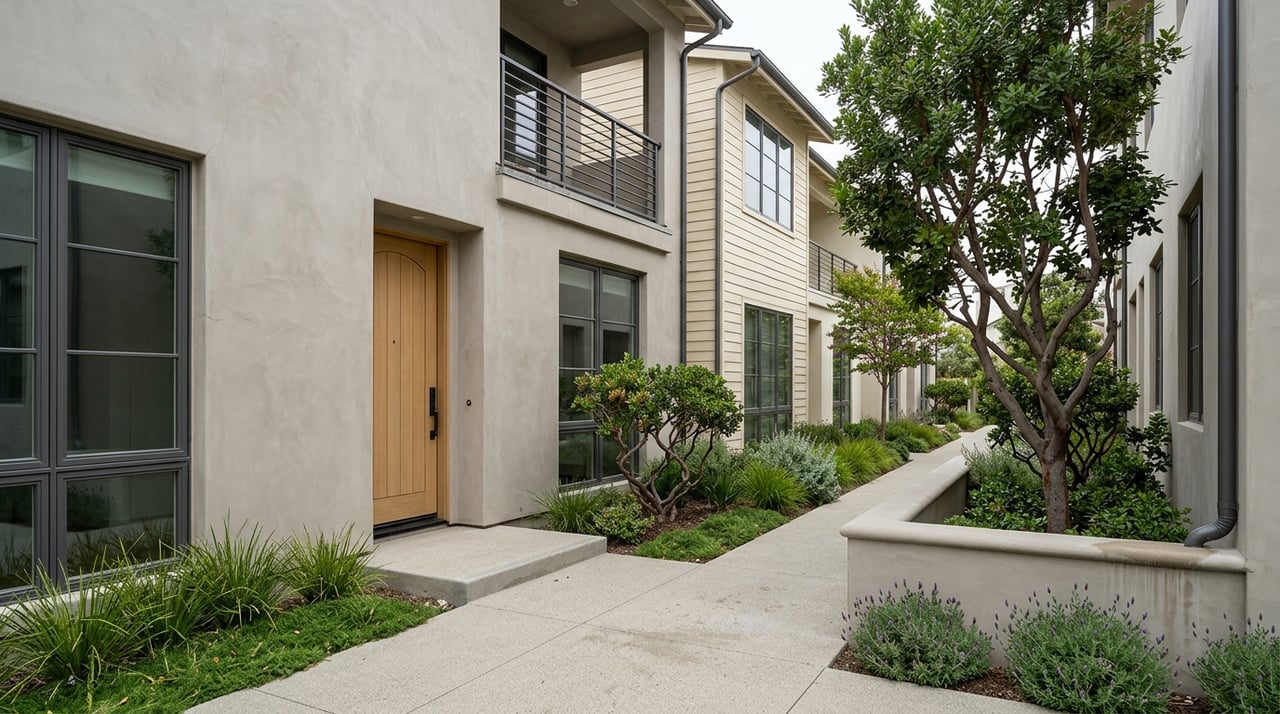
San Jose is one city, but it does not behave like one uniform housing market. The City of San José says about 94% of its residential land is designated for single-family houses, while current planning also pushes growth in downtown and urban villages where denser housing is encouraged.
That matters if you are buying for the first time. Condo and townhome options tend to cluster in transit-oriented and mixed-use areas instead of showing up evenly across the city, so your home search will look very different depending on where you focus.
Citywide housing context also helps set expectations. San Jose’s 2020 to 2024 ACS data show a 55.8% owner-occupied rate, a median owner-occupied home value of $1,233,200, and a median gross rent of $2,669.
Before you compare neighborhoods, it helps to decide what type of property gives you the best entry point. In San Jose, that usually means being honest about whether you are looking for a condo, townhome, or detached house first, then finding the neighborhood cluster that fits.
If you want the simplest path to a condo or townhome search, central and transit-linked areas usually make more sense. If you are focused on a detached home, established residential areas and lower-density parts of the city are often the better starting point.
Downtown San José is the clearest urban-core option in the city. The greater downtown area includes places around Japantown, San José State University, and Diridon Station, along with well-known destinations like City Hall, SAP Center, the Convention Center, San Pedro Square, SoFA, the Historic District, and Little Italy.
For first-time buyers, this is the most straightforward condo and apartment-style market. If you want a rail-first commute or a more urban daily routine, downtown is one of the easiest places to start your search.
Diridon Station is one of the key transportation anchors in San Jose. It connects Caltrain with ACE, Capitol Corridor, and Coast Starlight, and VTA serves the area with the Blue, Green, and Orange light rail lines plus Rapid 500 between Diridon and Berryessa BART.
That does not mean downtown is the right answer for every buyer. It means downtown makes the most sense when your daily route depends on rail connections and central-city access.
Willow Glen is one of San Jose’s best-known close-in residential areas. The city describes downtown Willow Glen as a main-street business district where residents can stroll to shopping and dining, while the North Willow Glen Conservation Area is made up mostly of small-lot residential properties developed during the first half of the 20th century.
In practical terms, Willow Glen is a strong example of an older, neighborhood-first area with local convenience and a strong single-family feel. It is also west of downtown and includes access to parks, community centers, and the Los Gatos Creek Trail.
If you want a neighborhood that feels established and easy to understand, Willow Glen often lands on the list quickly. It tends to appeal to buyers who care about nearby errands, older housing stock, and a classic residential pattern rather than a newer transit-oriented buildout.
Cambrian and nearby west-side areas are established residential parts of San Jose. The city describes the Cambrian/Pioneer area as mostly built out, with limited vacant land for new park development, which tells you this is not a neighborhood cluster defined by large-scale new construction.
That does not mean nothing changes here. Newer infill and mixed-use opportunities can appear along key corridors, and the Cambrian Park Mixed-Use Village Project is one example that includes apartments, single-family dwellings, and townhomes.
If you are looking here, expect an older residential framework first. This part of the city often makes the most sense for buyers who want an established setting and are open to watching for selective infill opportunities rather than expecting broad condo inventory throughout the area.
Berryessa and North San José are among the clearest examples of San Jose’s higher-density, transit-linked growth areas. The Berryessa BART Urban Village already includes single-family homes, townhouses, and small apartments, and the city plans for additional mixed-use, high-density housing around the station.
The Berryessa/North San José BART station opened in June 2020 and was the first BART station in San Jose. Parking there is managed by VTA and includes 1,527 spaces, which can make the area especially useful if you need a park-and-ride option.
North San José is not the same as Berryessa, even though buyers often group them together. The city describes North San José primarily as a commercial and employment district, with future high-density residential development planned near jobs and transit.
That makes this cluster worth watching if you want a neighborhood tied closely to commuting convenience and future growth patterns. Just make sure you compare the exact pocket, because the day-to-day feel can change quickly from one area to the next.
Evergreen is one of the more suburban-feeling parts of San Jose. City documents describe it as largely suburban with very limited multifamily housing, and the Evergreen-East Hills policy allows only limited new residential, commercial, and office development.
For a first-time buyer, that usually means fewer obvious condo and apartment-style options than you might see in more central or transit-oriented parts of the city. If you are looking for a suburban layout, that may be a plus. If you need a broader range of entry-level housing types, it may narrow your choices.
Eastside Alum Rock is more mixed in character. The city describes commercial corridors along Alum Rock Avenue and South Capitol Avenue with shopping plazas and centers next to single-family homes, apartments, and multifamily housing.
Local mobility is also evolving here. The Pa’Lante microtransit pilot covers 13 square miles and is designed to help residents travel between home, neighborhood destinations, and transit without driving.
Almaden is one of San Jose’s lower-density areas and sits within the city’s largely undeveloped southern quarter. For many first-time buyers, it reads as a more detached-home-oriented and open-space-oriented choice than the central city.
The city highlights amenities such as Almaden Lake Park, Almaden Quicksilver County Park, the Almaden Community Center and Library, Calero Creek Trail, Los Alamitos Creek Trail, and multiple neighborhood parks. If parks, trails, and a more edge-of-city setting matter to you, Almaden deserves a closer look.
There is a tradeoff with hillside and interface areas. The San José Fire Department flags Almaden Valley as one of the communities especially vulnerable to wildfire, so buyers considering homes in this part of the city should review wildfire exposure, access routes, and parking carefully.
Communications Hill stands out as one of San Jose’s clearest newer infill neighborhoods. The city describes it as a dense, highly urbanized, pedestrian-oriented residential neighborhood with about 4,700 planned residential units, with about 2,500 already built.
It also offers access to highways, light rail, and Caltrain, which is a useful mix for buyers who want newer housing close to central San Jose. Nearby, the Tamien Station Transit-Oriented Development project would add 569 multifamily residential units and a childcare center near transit.
This area is especially relevant if you are deciding between newer condos, townhomes, and low-rise multifamily homes. Compared with older established neighborhoods, Communications Hill and Tamien can offer a more clearly planned, infill-style housing experience.
In San Jose, commute strategy is often more useful than neighborhood reputation. The best location for you depends less on a citywide rule and more on the exact route you will use every day.
Rail-oriented buyers often compare Downtown or Diridon with Berryessa first. Car-oriented buyers may focus more on freeway and arterial access, such as Berryessa near U.S. 101, I-680, and I-880, Communications Hill near Highway 87 and Monterey Road, or North San José near I-880 and State Route 237.
If you rely on short local trips, VTA matters too. It serves Santa Clara County broadly, and for some buyers, that local mobility can be just as important as the longer regional commute.
A neighborhood is not only about the home itself. For many first-time buyers, daily livability comes down to how easy it is to get outside, run errands, grab coffee, or reach a grocery store without adding extra friction to the week.
Downtown offers Guadalupe River Park, plazas, and event spaces such as Plaza de César Chávez. Willow Glen connects well to the Los Gatos Creek Trail, while Berryessa and North San José have access to Penitencia Creek Trail, sections of Alum Rock Park, Guadalupe River Trail, Hetch Hetchy Trail, and Coyote Creek Trail.
Evergreen includes Evergreen Creek Trail, Silver Creek Valley Trail, and the Evergreen Community Center. Almaden offers Almaden Lake Park, the Quicksilver park system, and Los Alamitos Creek Trail, while Alum Rock Park provides 720 acres of hiking, biking, and picnic space.
Convenience also varies a lot by neighborhood. Downtown and Japantown have the densest concentration of walkable dining and cultural stops, Willow Glen has a main-street retail pattern, Berryessa has retail plazas around Berryessa Road and the San José Flea Market, and East San Jose mixes commercial centers with nearby housing.
If you are feeling stuck, start by comparing neighborhoods based on how you want to live rather than trying to study every part of the city at once.
One smart way to narrow your search is to compare one transit-oriented area, one older close-in neighborhood, and one more suburban single-family area in the same weekend. That approach matches the way San Jose actually works: a collection of very different micro-markets inside one large city.
Buying your first home in San Jose gets easier when you stop asking, “What is the best neighborhood?” and start asking, “Which neighborhood fits the way I want to live and commute?” If you want strategic guidance on comparing San Jose micro-markets and finding the right fit for your goals, connect with Michael Pren.
Stay up to date on the latest real estate trends.
Michael is dedicated to helping you find your dream home and assisting with any selling needs you may have. Contact Michael today to discuss all your real estate needs!
MICHAEL PREN | CA DRE# 02219355
ADDRESS 750 University Ave Ste 150 Los Gatos, CA 95032